13 AI Mistakes Website Owners Should Avoid
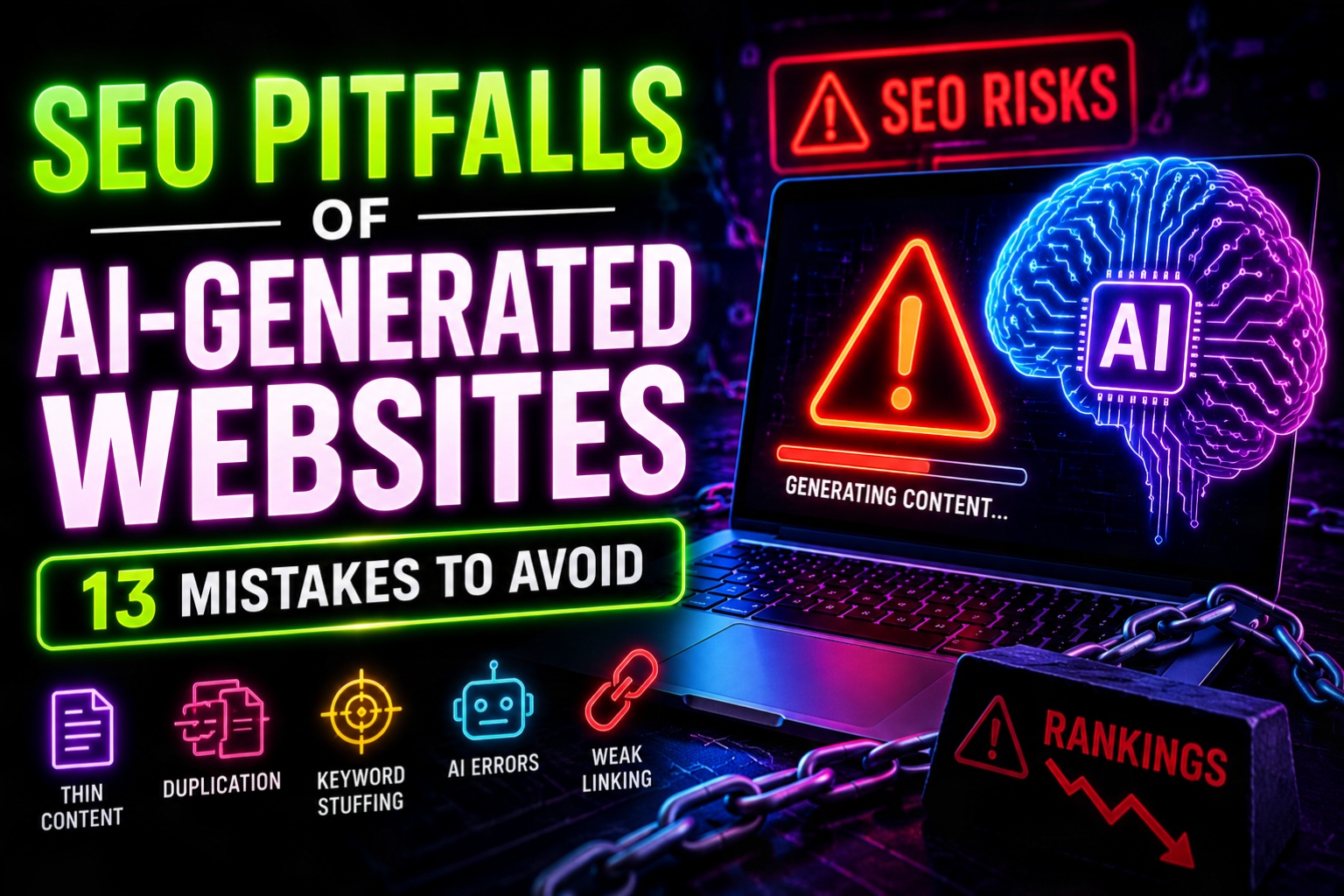
The SEO pitfalls of AI-generated websites are becoming important as AI changes how people build websites.
AI changes how people build websites and create online content.
However, faster website creation does not automatically mean better search engine optimization.
AI can be an excellent tool when people use it carefully. Yet website owners can create serious SEO problems when they rely on automated content without editing, fact-checking or adding original value.
Fortunately, businesses do not have to choose between AI and traditional website development.
A better approach combines the speed of artificial intelligence with human experience, strong SEO practices and reliable web hosting.
In this guide, HostRite Cloud Hosting examines the biggest SEO pitfalls of AI-generated websites and explains how website owners can avoid them.
What Are the SEO Pitfalls of AI-Generated Websites?
The main SEO pitfalls of AI-generated websites occur when automation replaces quality rather than improving it.
Common problems include thin content, inaccurate information, duplicated ideas, weak search intent, poor internal linking, keyword stuffing and websites filled with pages that provide little original value.
AI itself is not necessarily the problem.
Instead, problems usually develop because of how AI-generated material is created and published.
Website owners should therefore treat AI as an assistant. It can speed up research, outlines and drafting. However, people should still review the final content before publication.
Is AI-Generated Content Bad for SEO?
No. AI-generated content is not automatically bad for SEO.
High-quality AI-assisted content can still be informative, useful and relevant.
However, an article should do more than repeat information that already appears across hundreds of other websites.
Search engines want to provide useful answers to their users. Therefore, website owners should focus on satisfying the visitor. Rather than producing pages simply because AI makes them easy to create.
The difference is important.
AI can help create good content. It should not become an excuse to publish bad content faster.
SEO Pitfall #1: Publishing AI Content Without Editing It
One of the most common SEO pitfalls of AI-generated websites is publishing the first AI-generated draft.
AI can create polished writing remarkably quickly. However, polished writing can still contain problems.
For example, AI-generated articles may include incorrect facts, outdated information, unnecessary repetition or statements that sound authoritative without sufficient evidence.
Therefore, review every important article before publishing it.
Check names, dates, statistics, prices, product features and technical instructions.
Also ask a simpler question:
Would a real visitor find this article useful?
If the answer is uncertain, continue improving it.
SEO Pitfall #2: Creating Generic Content
AI is trained on enormous amounts of information.
As a result, different AI-generated articles can sometimes sound surprisingly similar.
They may use comparable introductions, headings, explanations and conclusions.
That makes originality especially important.
How to Make AI-Generated Content More Original
Add information that comes from genuine experience.
For example, include:
- Firsthand observations
- Original photographs
- Screenshots
- Real testing
- Product comparisons
- Customer experiences
- Case studies
- Unique opinions
- Original research
- Practical examples
These additions can transform a generic AI-generated article into genuinely useful content.
More importantly, they give visitors a reason to choose your website instead of another one.
SEO Pitfall #3: Mass-Producing Hundreds of Pages
AI makes it possible to produce an enormous amount of content.
That capability can become tempting.
For example, a website owner could discover hundreds of keywords and automatically create a separate article for each one.
However, more pages do not automatically produce more search traffic.
If hundreds of pages offer little unique value, they may make the entire website less useful.
Quality Should Come Before Quantity
Instead of asking:
How many articles can AI generate today?
Ask:
How many genuinely useful articles can we publish and maintain?
A smaller collection of excellent resources can provide more long-term value than thousands of weak pages.
Quality should remain the priority.
SEO Pitfall #4: Keyword Stuffing
Another common problem is excessive keyword use.
For example, it would be easy to tell an AI writing tool to use the phrase SEO pitfalls of AI-generated websites dozens of times.
That would not necessarily improve the article.
In fact, repeating a phrase unnaturally can make content difficult and annoying to read.
A better strategy is to use the primary keyphrase naturally while also including related terminology.
Useful related phrases include:
AI-generated website SEO, AI content SEO, AI website optimization, artificial intelligence content, website SEO and AI-generated content.
This approach creates a much more natural article.
SEO Pitfall #5: Ignoring Search Intent
Keywords are important.
However, understanding why someone entered a keyword is even more important.
Consider someone searching for:
SEO pitfalls of AI-generated websites
That person probably wants to know what can go wrong and how to prevent those problems.
Therefore, this article should answer those questions clearly.
It should not simply repeat the focus keyphrase while discussing unrelated AI topics.
Match the Content to the Visitor’s Question
Before creating a page, identify what the visitor probably wants.
Then build the article around that objective.
For informational searches, provide useful answers.
For product searches, explain the product.
For comparison searches, compare the alternatives.
For transactional searches, make the next step obvious.
Matching search intent makes content more useful to both visitors and search engines.
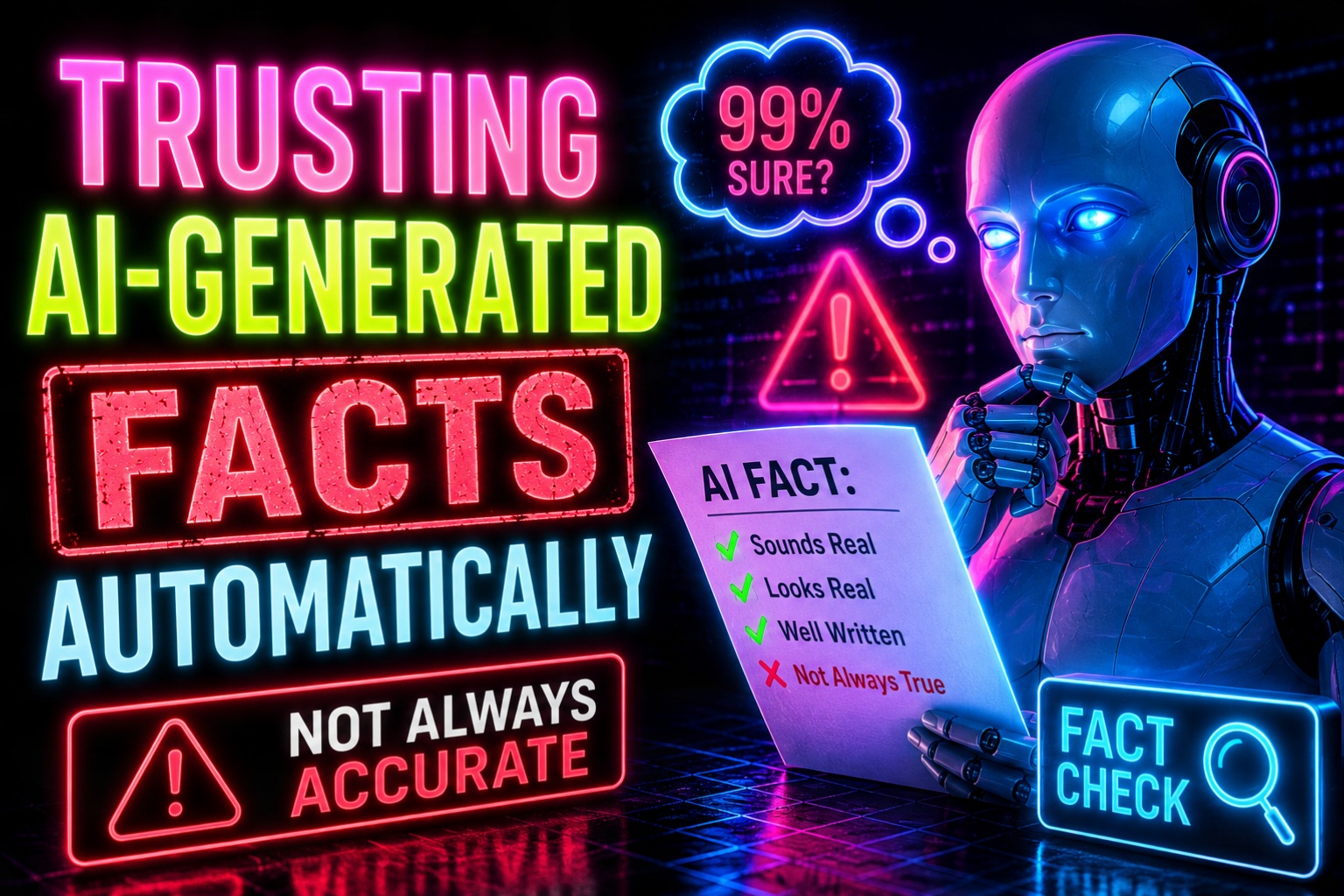
SEO Pitfall #6: Trusting AI-Generated Facts Automatically
Artificial intelligence can occasionally produce inaccurate information.
Even worse, the incorrect information can sound convincing.
AI may produce inaccurate:
- Statistics
- Dates
- Quotes
- Product specifications
- Software features
- Company information
- Technical instructions
- Sources
Therefore, important factual claims should receive human review.
This is especially important when content discusses financial, legal, medical, technical or safety-related subjects.
Accuracy builds trust.
Incorrect information destroys it.
SEO Pitfall #7: Losing Your Brand’s Personality
A website should have its own voice.
However, poorly prompted AI can make every business sound the same.
A hosting company, restaurant, newspaper and landscaping contractor should not all sound identical.
Therefore, give AI clear information about your business.
Tell it about your audience, products, services, writing style and terminology.
Afterward, review the content and make sure it still sounds appropriate for your organization.
Give Visitors a Reason to Remember Your Website
Good branding extends beyond logos and colors.
The way a business communicates also becomes part of its identity.
AI should help strengthen that identity rather than erase it.
SEO Pitfall #8: Ignoring Experience, Expertise and Trust
AI can summarize information quickly.
However, it does not automatically provide firsthand experience.
Consider two product reviews.
One article simply summarizes specifications.
Another explains how the product performed during actual use, what worked well and what could be improved.
The second article offers something more valuable.
Add Genuine Experience to AI-Assisted Articles
When possible, explain:
- What was tested
- How it was tested
- How long it was used
- What performed well
- What caused problems
- Who might benefit
- Who might prefer something else
This type of information helps distinguish genuinely useful content from generic summaries.
SEO Pitfall #9: Forgetting Technical SEO
Content represents only one part of SEO.
A website must also provide a solid technical foundation.
Important technical SEO considerations include:
- HTTPS
- Mobile-friendly design
- Clear navigation
- Crawlable pages
- XML sitemaps
- Canonical URLs
- Proper redirects
- Optimized images
- Logical internal linking
- Appropriate structured data
- Fast page delivery
AI can explain these concepts.
However, your website still needs to implement them properly.
SEO Pitfall #10: Ignoring Website Speed
Website speed remains important regardless of who created the content.
An AI-generated website can look beautiful and still perform poorly.
Large images, excessive scripts, complicated themes and unnecessary plugins can increase page-loading times.
Therefore, website owners should consider performance while building the site rather than waiting until problems appear.
Web Hosting Still Matters
An AI website builder and a web hosting provider perform different jobs.
An AI tool can help create content, code or page layouts.
Web hosting provides the infrastructure used to deliver the website to visitors.
Consequently, reliable hosting remains important even when artificial intelligence handles part of the website-building process.
At HostRite Cloud Hosting, website owners can use modern development tools while maintaining the flexibility of traditional web hosting.
SEO Pitfall #11: Using Huge AI-Generated Images
AI-generated images can look impressive.
Unfortunately, high-resolution images can also create very large files.
Uploading those files directly to a website may increase page weight.
Instead, prepare images for web use.
Resize oversized images and compress them when appropriate.
Choose efficient formats when practical.
Also use descriptive filenames and relevant ALT text.
For an image directly associated with this article, an appropriate ALT description could be:
SEO pitfalls of AI-generated websites and website optimization
However, ALT text should primarily describe the image accurately. Do not force the focus keyphrase into unrelated images.
SEO Pitfall #12: Forgetting Internal Links
A good article should not exist by itself.
Internal links help visitors discover related information.
They also create logical connections between pages.
For example, an article about the SEO pitfalls of AI-generated websites could naturally link to relevant HostRite articles about:
- WordPress hosting
- Website performance
- Domain registration
- Website security
- Website migration
- Choosing a hosting provider
- Varnish Cache
- Website backups
Use descriptive anchor text whenever possible.
Instead of:
Click here
consider:
Learn more about WordPress hosting
That provides visitors with useful context before they select the link.
SEO Pitfall #13: Publishing Content and Never Updating It
Publishing is not the final step.
Technology changes rapidly, and artificial intelligence changes even faster.
Software gets updated. Companies change products. Prices change. Services disappear. New SEO practices emerge.
Therefore, periodically review important articles.
Update Older AI Content
Look for:
- Outdated facts
- Broken links
- Old screenshots
- Changed prices
- Obsolete recommendations
- Missing developments
- Weak sections
- Opportunities for better internal links
AI can help identify content that may need attention.
However, verify the suggested changes before publishing them.
How to Avoid the SEO Pitfalls of AI-Generated Websites
Avoiding the SEO pitfalls of AI-generated websites does not require abandoning artificial intelligence.
Instead, use AI more carefully.
Start with research and a clear goal.
Then create an outline that matches search intent.
Use AI to accelerate drafting when appropriate.
Next, review the content personally.
Add firsthand knowledge, original information, examples and useful media.
Finally, optimize the article for readers and search engines before publication.
This workflow provides the speed of AI without sacrificing quality.
AI Plus Human Experience Is a Better Strategy
The best website content does not necessarily have to be completely human-written or completely AI-generated.
A combined approach can work extremely well.
AI can assist with:
- Topic ideas
- Keyword ideas
- Outlines
- Drafting
- Grammar
- Organization
- Summaries
- FAQ ideas
- Headline ideas
- Editing
Meanwhile, people provide:
- Judgment
- Experience
- Verification
- Personality
- Expertise
- Original ideas
- Accountability
Together, those strengths can create stronger content.
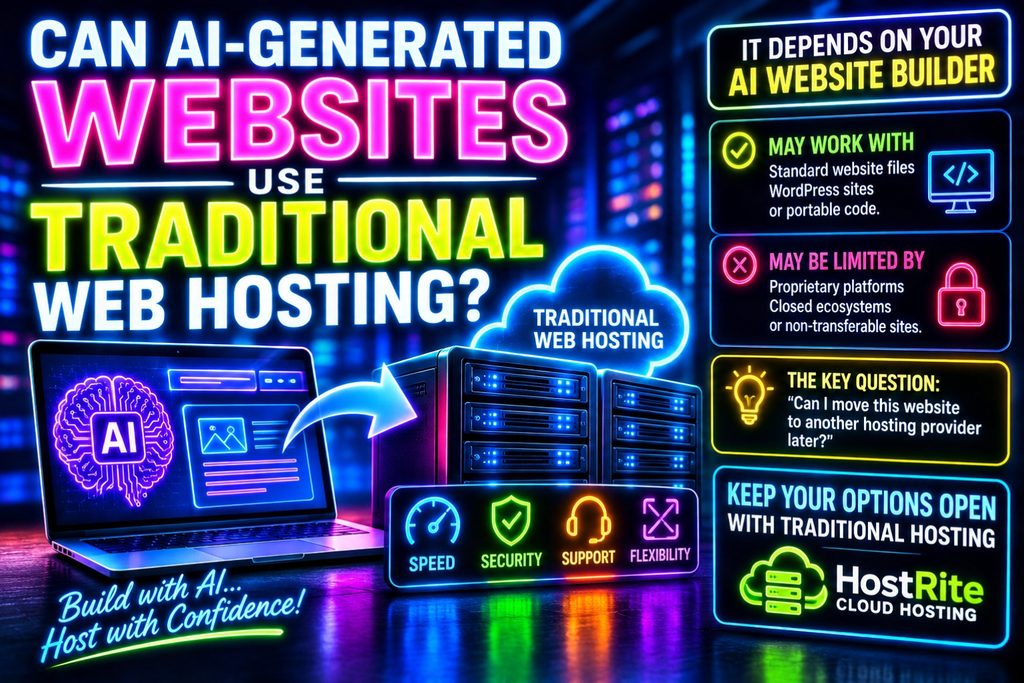
Can AI-Generated Websites Use Traditional Web Hosting?
In many cases, yes.
However, it depends on the platform used to create the website.
Some AI website builders operate inside closed platforms.
As a result, moving the finished website to another hosting provider may be difficult or impossible.
Other tools generate standard HTML, WordPress websites or portable source code.
Those websites may provide considerably more flexibility.
Ask This Question Before Choosing an AI Website Builder
Can I move my website to another hosting provider later?
That one question can prevent problems in the future.
Website ownership and portability matter.
You might love a website builder today but eventually require more storage, better performance, different software or another hosting environment.
Keeping your options open can be valuable.
Why Traditional Web Hosting Still Matters in the AI Era
Artificial intelligence changes how websites are created.
It does not eliminate the infrastructure behind them.
Websites still need servers, networking, storage, security and support.
Therefore, website owners should still consider:
Reliability, performance, flexibility, security and support.
A great AI-generated website running on an unsuitable hosting environment can still provide a poor visitor experience.
Meanwhile, strong hosting gives the website a better technical foundation.
At HostRite Cloud Hosting, customers can combine traditional hosting flexibility with the modern tools they prefer to use.
Should Small Businesses Use AI to Build Websites?
AI can be especially helpful for small businesses.
A business owner may use AI to brainstorm website copy, develop initial layouts, generate FAQ ideas and improve existing text.
That can save considerable time.
However, business owners should still review the website carefully.
Make sure contact information is correct.
Verify services and prices.
Check claims.
Read every important page.
Finally, test the website on both desktop and mobile devices.
The finished website represents the business, regardless of how it was created.
Can AI Content Rank in Search Engines?
AI-assisted content can compete in search results when it provides useful information and meets normal quality expectations.
The important question is not simply:
Was AI involved?
A better question is:
Does this page deserve to rank?
Does it answer the search?
Is the information correct?
Is it easy to understand?
Does it provide something worthwhile?
Would a person recommend it to someone else?
Those questions provide a stronger framework for content creation.
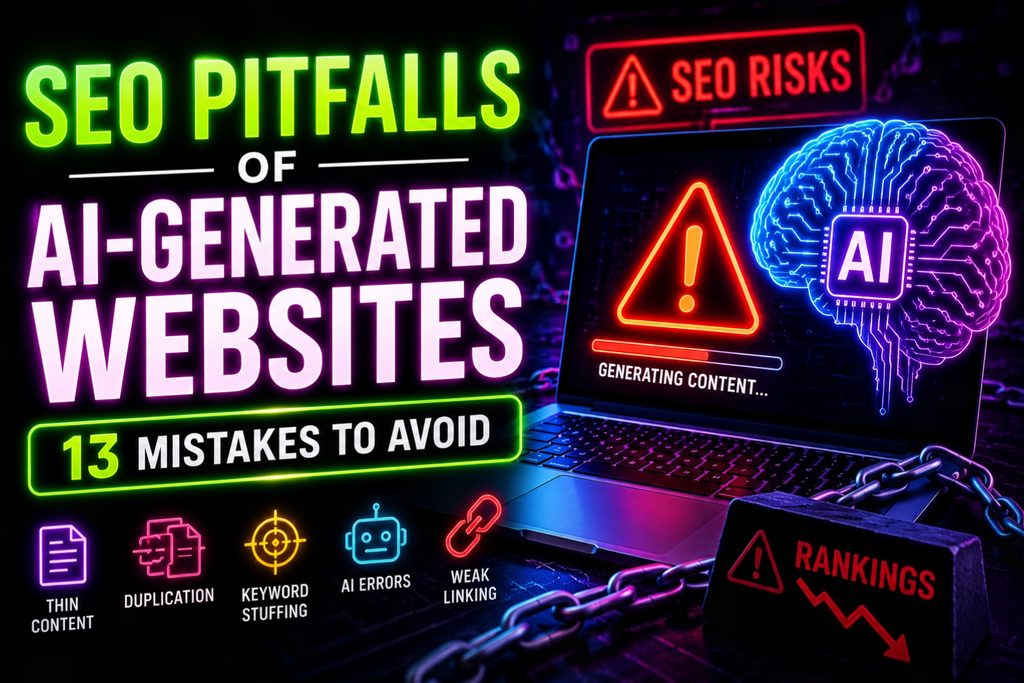
Frequently Asked Questions About SEO Pitfalls of AI-Generated Websites
What are the biggest SEO pitfalls of AI-generated websites?
The biggest SEO pitfalls of AI-generated websites include generic content, factual errors, keyword stuffing, mass-produced pages, weak search intent, poor internal linking, outdated information and a lack of genuine experience.
Does Google automatically penalize AI-generated websites?
AI use alone does not automatically make website content poor quality. Website owners should focus on creating original, accurate and genuinely useful pages instead of publishing large quantities of low-value material.
Can AI-generated website content rank well?
Yes, useful AI-assisted content can compete in search results. However, quality, relevance, originality, search intent and technical website performance still matter.
Should AI-generated articles receive human editing?
Yes. Human review can improve accuracy, readability, originality and usefulness. Editors can also add experience and details that an AI system does not know.
How often should AI-generated content be updated?
Review important articles periodically and update them whenever information, products, prices, software or industry practices change.
Is AI-generated content good for small business websites?
It can be. AI can help small businesses create drafts, outlines and ideas more efficiently. However, the business should verify important information and personalize the finished website.
Does hosting affect AI-generated website SEO?
Hosting can affect website availability, performance and the overall visitor experience. Therefore, choosing reliable hosting remains important whether a website was created manually, with WordPress or through AI-assisted tools.
Can I move an AI-generated website to HostRite Cloud Hosting?
Possibly. It depends on whether the website-building platform allows the site, files, database or source code to be exported. Check portability before choosing a proprietary AI builder.
Final Thoughts on SEO Pitfalls of AI-Generated Websites
The SEO pitfalls of AI-generated websites do not mean website owners should avoid artificial intelligence.
AI can be an incredibly useful tool.
However, successful websites still require human judgment.
Use AI to work faster, but do not allow speed to replace quality.
Create content for real visitors. Verify important facts. Add genuine experience. Avoid keyword stuffing. Build useful internal links. Optimize images. Maintain the website. Keep technical SEO in good condition.
Most importantly, give visitors something worth finding.
Artificial intelligence may change how websites are built, but the fundamental goal remains the same:
Create a useful website that people trust and want to visit.
For website owners who want the flexibility of traditional hosting while taking advantage of modern AI tools, HostRite Cloud Hosting provides a foundation for building, hosting and growing an online presence.